-
By pgigrwpakistan
-
February 8, 2024
- 0 Comment
Application & ROI: Selecting the Ideal Unsaturated Polyester Resin for Maximum Durability and Cost-Efficiency
The durability of composite products—from fiberglass-reinforced doors to chemical storage tanks—depends heavily on avoiding a quiet but costly manufacturing defect: under-cured resin.
While surface-level hardness can fool the eye, improper cross-linking in unsaturated polyester resin (UPR) or epoxy resin leads to micro-cracking, delamination, chemical leaching, and premature failure under load.
Understanding the Chemistry Behind Curing
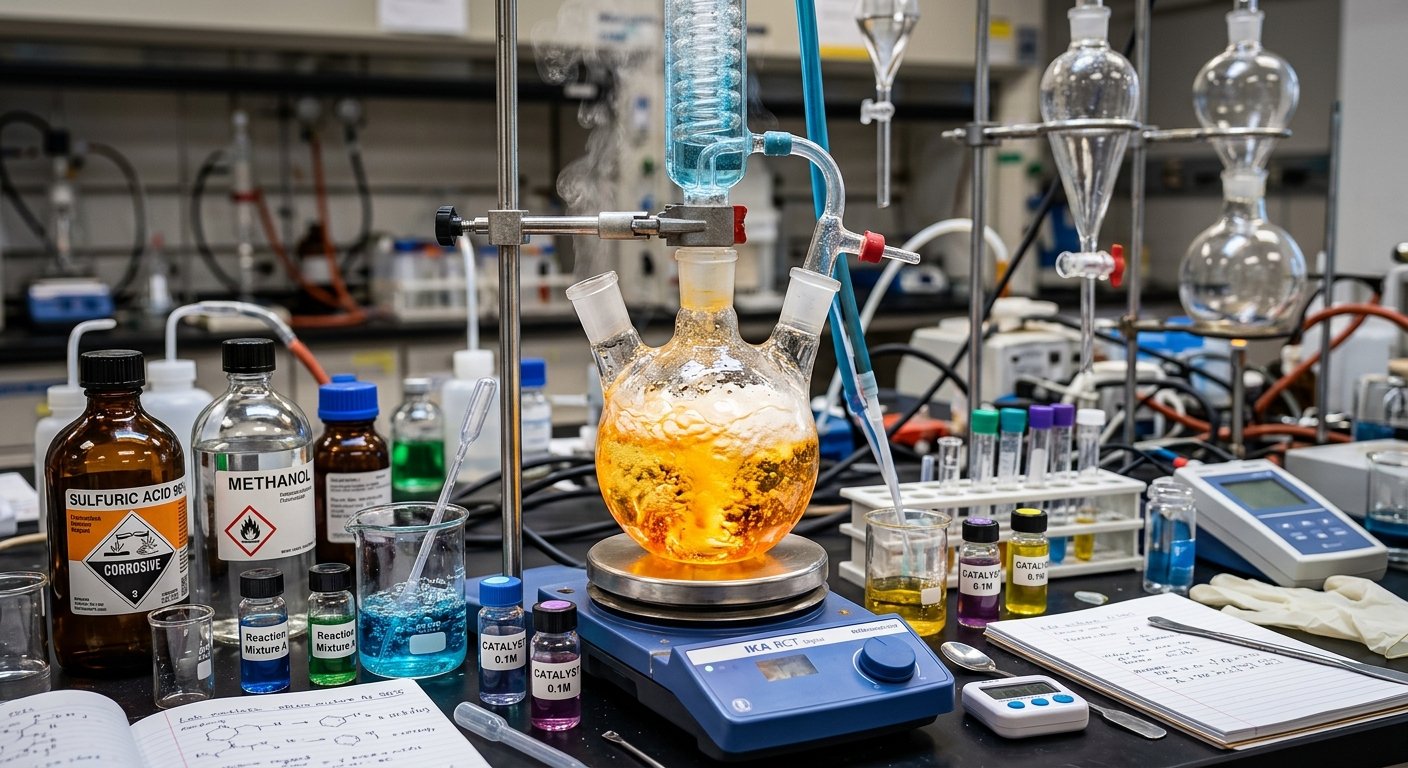
Unsaturated polyester resin transforms from a liquid monomer to a solid polymer via free-radical polymerization. Adding a catalyst (typically MEKP) and an accelerator (such as Cobalt Octoate) initiates cross-linking between polyester chains and styrene monomers.
When this cross-linking reaches 95% or higher, the resin achieves its intended mechanical and thermal properties. If the process stalls, unreacted monomers remain trapped within the polymer matrix.
5 Critical Indicators of Under-Cured Resins
-
Surface Tackiness: The gel coat or laminate remains sticky long after the expected demolding time, often caused by styrene evaporation or air inhibition.
-
Depressed Glass Transition Temperature ($T_g$): The material softens or warps at temperatures well below its design threshold.
-
Chemical Leaching & Odor: A persistent styrene smell indicates unreacted volatile monomers trapped inside the resin matrix.
-
Low Barcol / Shore Hardness Readings: The laminate feels solid to the touch but registers lower than target values on a hardness tester.
-
Flexural Creep Under Load: Structural profiles sag or deform permanently under normal load conditions.
Root Causes & Technical Solutions
| Problem Cause | Mechanism | Preventive Action |
| Incorrect MEKP Ratio | Less than 1% leads to incomplete initiation; greater than 2.5% causes brittleness and premature thermal shutdown. | Maintain catalyst levels strictly between 1.2% and 2.0% by weight. |
| Low Ambient Temperature | Curing reactions slow dramatically below 18°C (64°F), leaving chains unlinked. | Pre-heat resin and workshop to 20°C–25°C prior to mixing. |
| High Atmospheric Humidity | Water molecules react with peroxide initiators, quenching active radicals. | Keep relative humidity below 70% in mixing and lay-up areas. |
| Moisture in Fillers / Pigments | Fillers containing trace moisture deactivate accelerators like Cobalt Octoate. | Use oven-dried, resin-compatible industrial fillers and masterbatches. |
The Role of Post-Curing in Industrial Applications
For structural composites, marine components, and heavy-duty FRP products, room-temperature curing alone is often insufficient. Post-curing elevates cross-linking density to maximum theoretical limits.
-
Ramp-Up: Gradually increase temperature by 10°C to 15°C per hour to prevent thermal shock.
-
Hold Phase: Maintain the laminate at 60°C–80°C for 3 to 5 hours depending on resin grade and thickness.
-
Cool-Down: Allow the part to cool slowly inside the oven to eliminate internal stress.
Taking control of gel times, ambient conditions, and post-curing schedules ensures every resin formulation delivers maximum strength, weatherability, and longevity.