-
By pgigrwpakistan
-
January 3, 2024
- 1 Comment
Vinyl Ester vs. Isophthalic Resin: Selecting the Right Matrix for Severe Chemical Environments
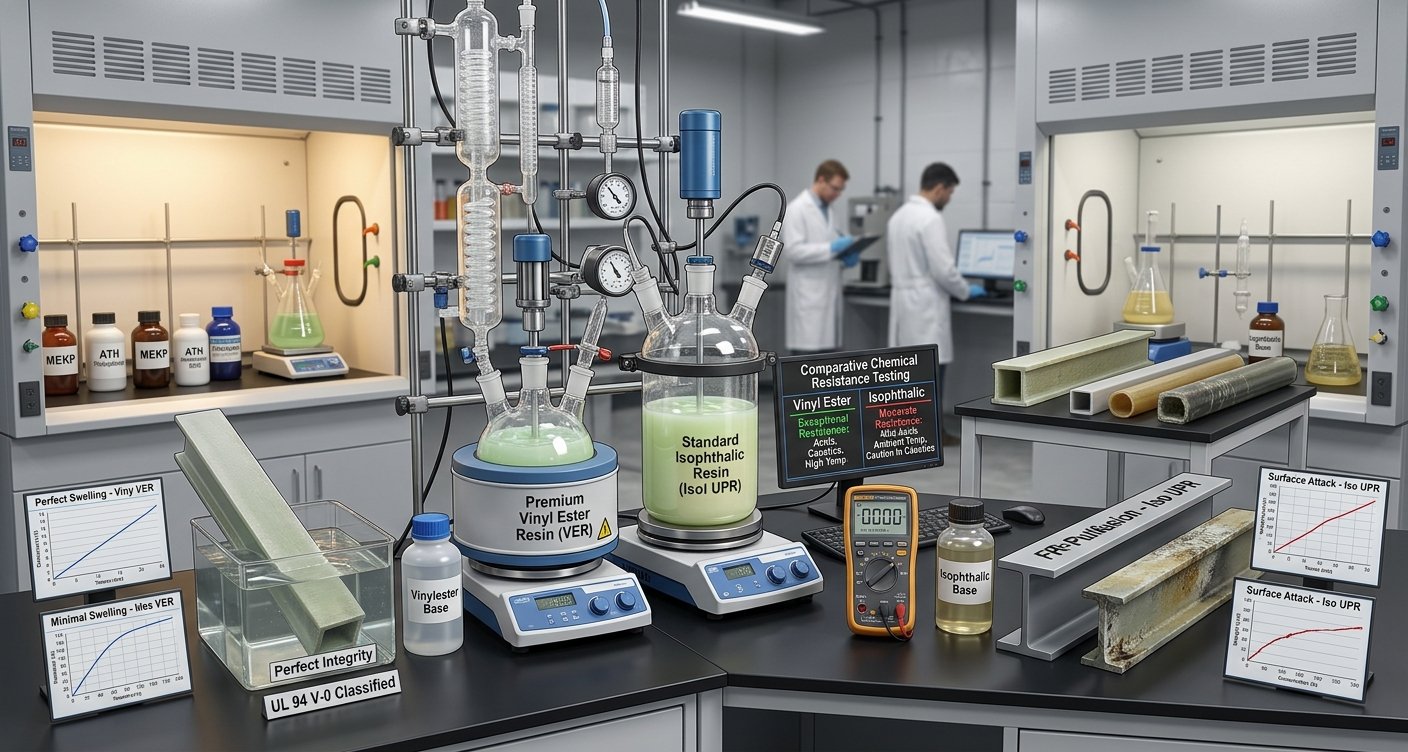
Selecting the optimal resin system for harsh chemical containment, marine structures, and industrial piping directly impacts service life and maintenance costs. While Isophthalic Unsaturated Polyester Resin (Iso UPR) offers excellent mid-tier protection, Vinyl Ester Resin (VER) provides superior resistance against aggressive acids, alkalis, and thermal stress.
Chemical Architecture: Why Vinyl Ester Outperforms
The difference in chemical resistance between Iso UPR and Vinyl Ester stems from their molecular backbones:
Ester Linkage Density: Vinyl ester resins contain fewer ester linkages along the polymer chain than polyester resins. Because ester linkages are the primary targets for hydrolytic attack, fewer linkages mean significantly lower susceptibility to chemical breakdown.
Terminal Reactivity: The reactive double bonds in vinyl ester resins are located exclusively at the ends of the polymer chains. This configuration allows the entire length of the polymer chain to absorb mechanical stress and shock without fracturing.
Built-in Epoxy Backbone: Vinyl ester is synthesized by reacting epoxy resin with acrylic or methacrylic acid, combining the toughness of epoxy with the rapid curing dynamics of polyester.
Technical Performance Comparison
| Performance Metric | Isophthalic Polyester (Iso) | Premium Vinyl Ester (VER) |
| Tensile Elongation | 2.5% – 3.5% | 4.0% – 6.0% |
| Heat Deflection Temp (HDT) | 85°C – 100°C | 105°C – 130°C+ |
| Acid Resistance ($H_2SO_4, HCl$) | Moderate (up to 30% concentration) | Exceptional (up to 70%+ concentration) |
| Caustic Resistance ($NaOH$) | Fair to Poor | Excellent |
| Water Absorption (24 hrs) | Low (0.15% – 0.20%) | Ultra-low (0.08% – 0.12%) |
Application Guidelines for Engineering Projects
Use Isophthalic Resin When: Building standard marine hulls, outdoor FRP architectural panels, or storage tanks holding water, mild acids, or petroleum products at ambient temperatures.
Upgrade to Vinyl Ester Resin When: Fabricating chemical process piping, flue gas desulfurization (FGD) scrubbers, electrowinning cells, or storage vessels exposed to concentrated acids, chlorine, or caustic soda at elevated temperatures.
Hybrid Construction (Barrier Layer): For cost-effective chemical tanks, apply a vinyl ester corrosion barrier (skin coat) for the inner 2.5 mm – 3 mm facing the chemical medium, backed by an isophthalic resin structural laminate for structural strength.
Matching resin chemistry to specific fluid exposure, concentration, and temperature profile prevents premature micro-cracking, osmotic blistering, and costly structural failures in industrial equipment.
Hi, this is a comment.
To get started with moderating, editing, and deleting comments, please visit the Comments screen in the dashboard.
Commenter avatars come from Gravatar.